QuickBooks Online is currently the dominant accounting software for small to medium companies, despite its cumbersome user interface. At Instabooks, our mission is making it faster and easier to interact with your financial data. The Instabooks UI gives you a lightning-fast view of your transactions that syncs bidirectionally with QuickBooks. And now, Instabooks Database Access lets you connect directly to our servers and issue PostgreSQL queries.
The real achievement of Instabooks isn't the UI—as great as it is—but the sync engine that pulls your data into a normalized database schema that is easy to process and query over. So we thought, why not offer that directly? That way, people can create their own tools and workflows.
You can use SQL access in many different ways:
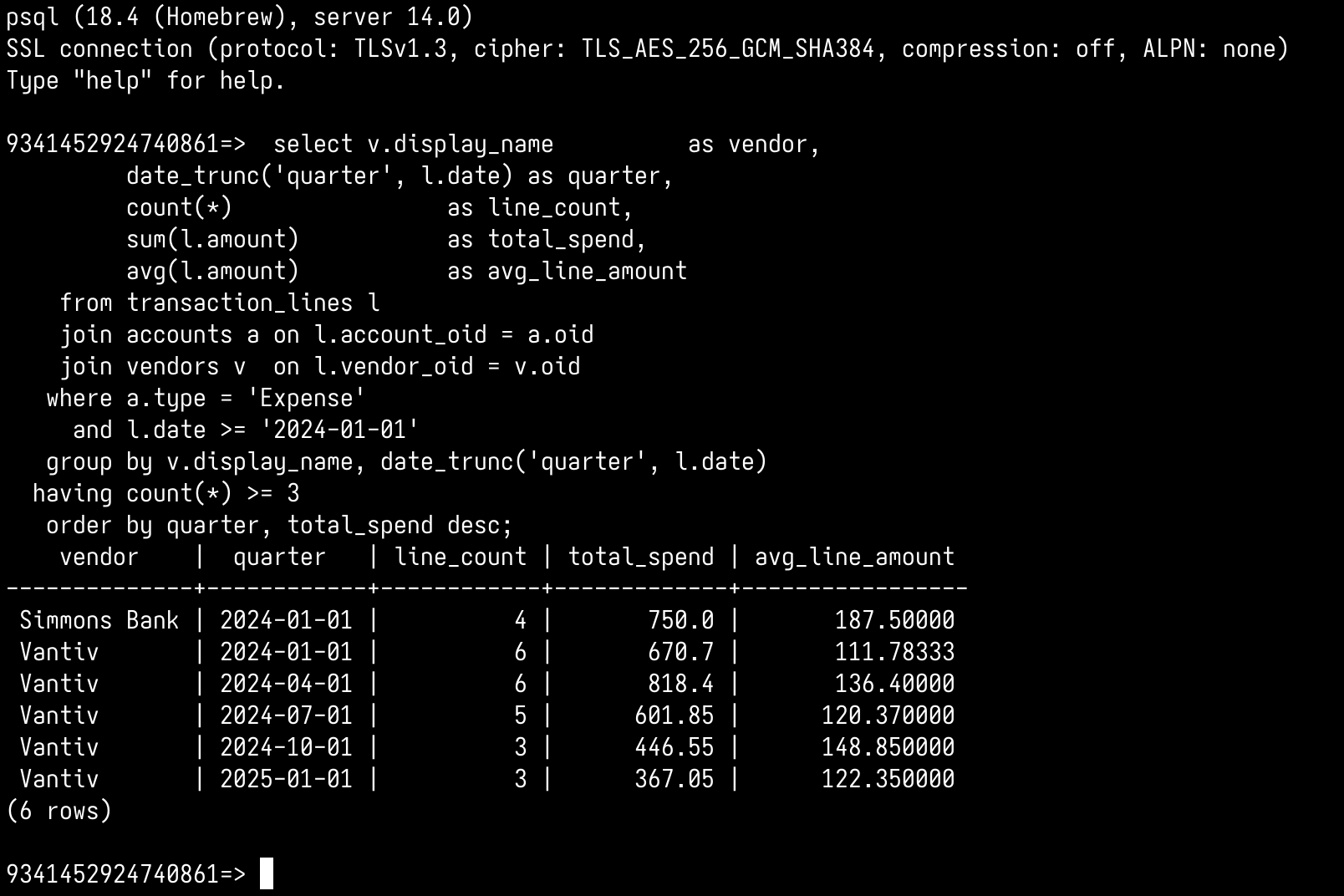
- from the command line, with psql
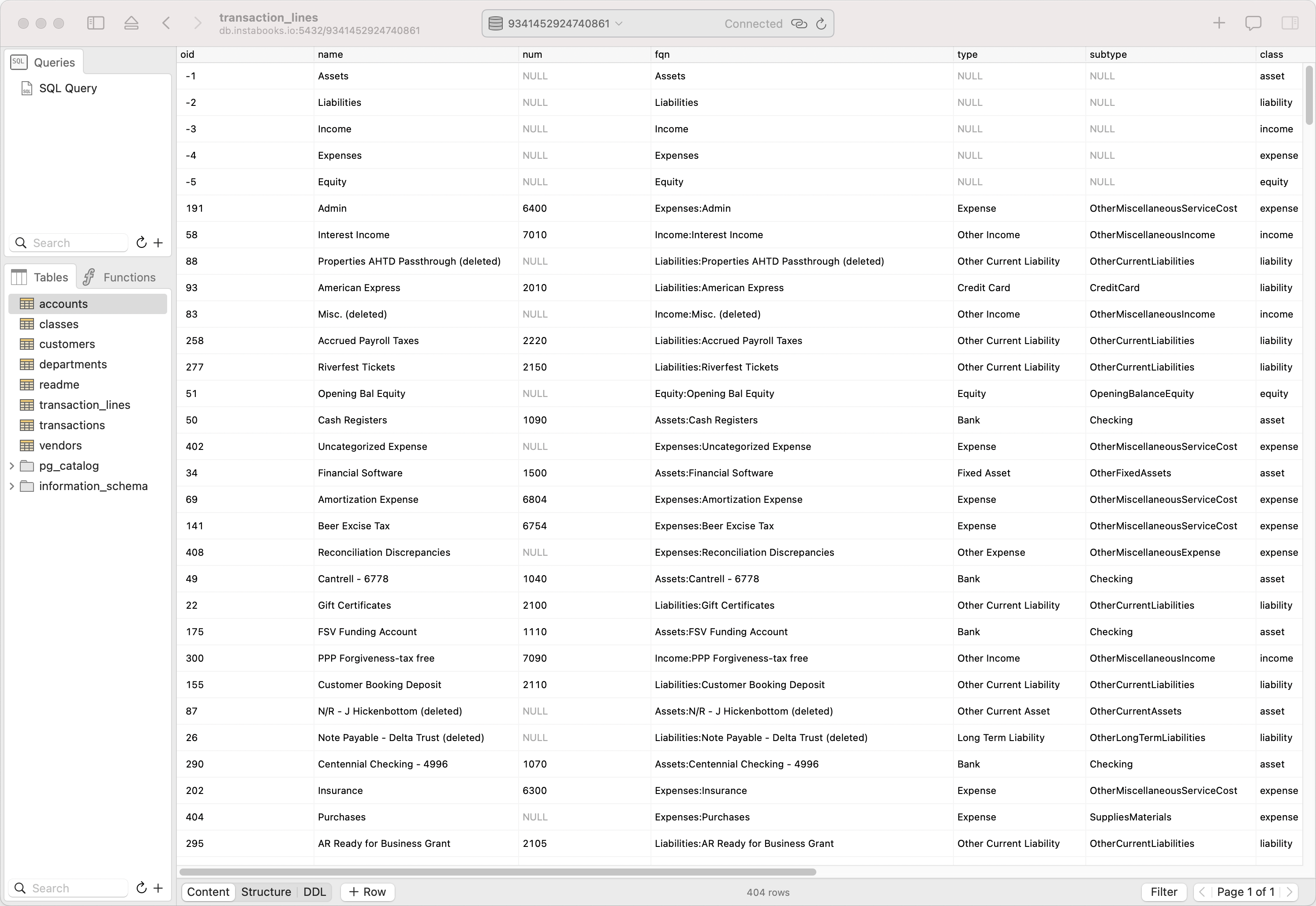
- with a GUI client that speaks the Postgres wire protocol, like Postico
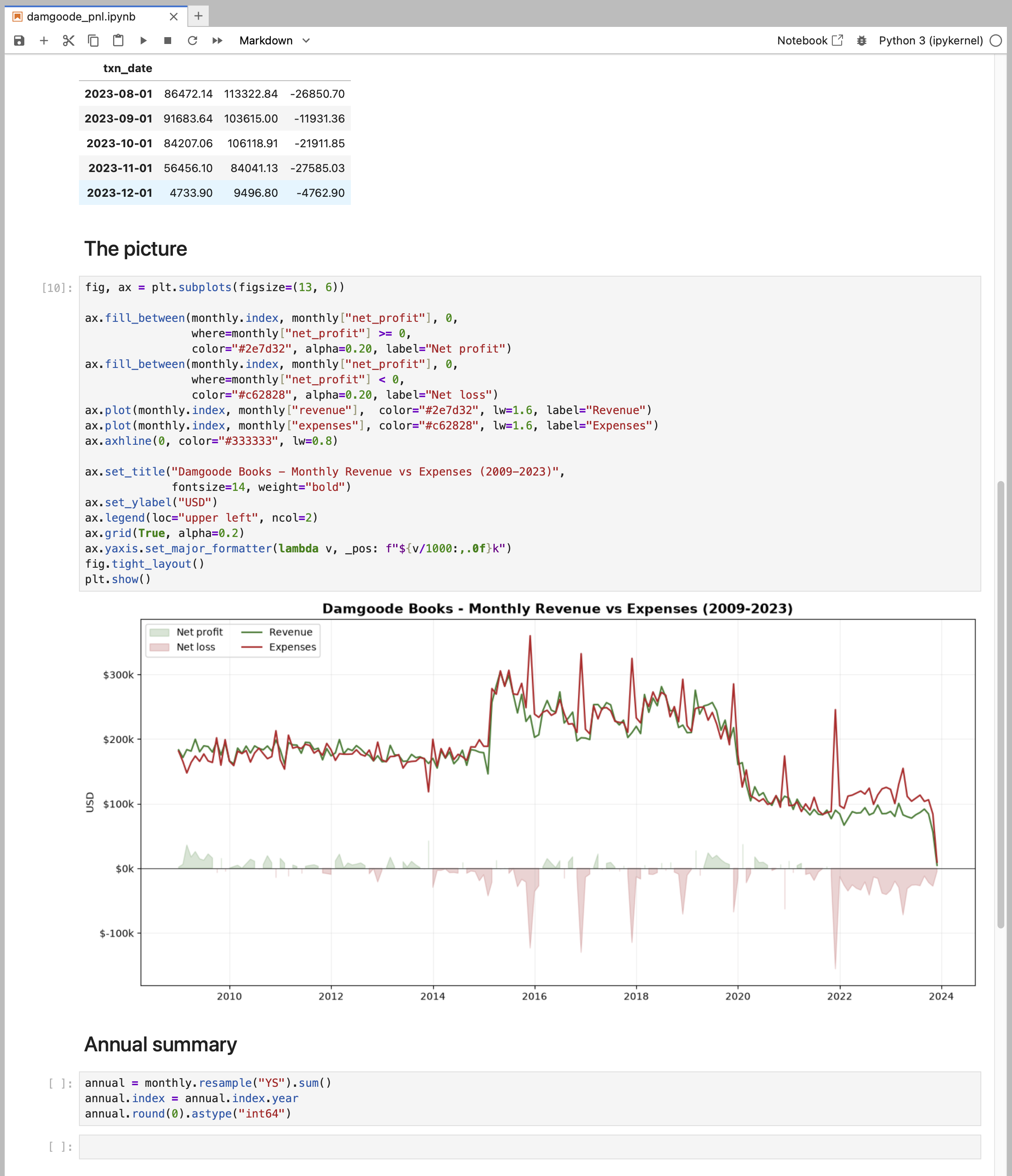
- from a Jupyter notebook
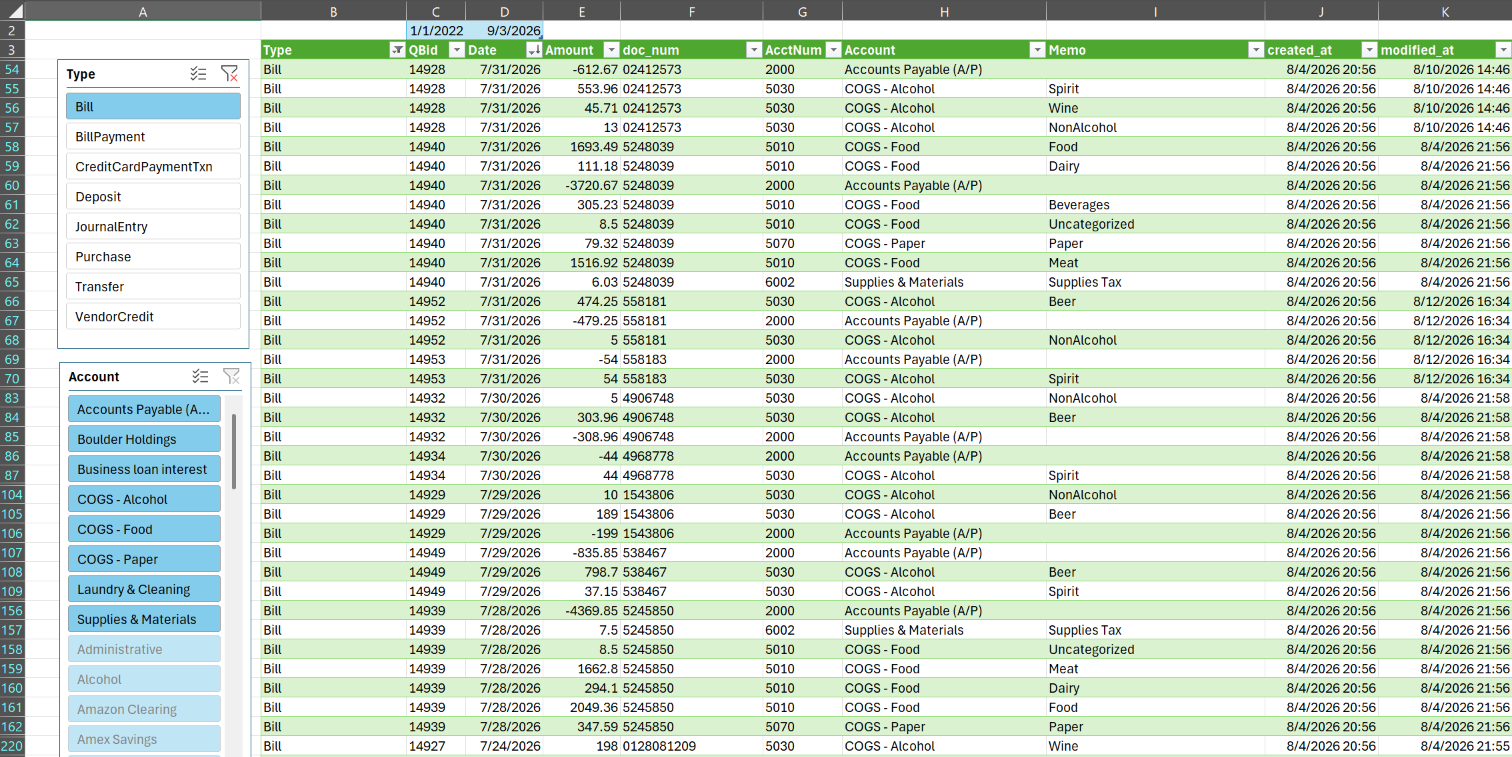
- even from Excel!
See the docs for details about how to configure these clients.
We think that giving users more direct access to their data is the future of software, and that AI is going to accelerate this trend. Increasingly, LLM-powered assistants and agents are capable of being great interfaces for interacting with information—even superior to a GUI for some tasks. That may have sounded like hype a year ago, and maybe it still does to someone who hasn't tried the latest tools and models, but today, it's our reality. As programmers, we dialogue with our codebase; when we work with our finances, we dialogue with our books. And it works. Moreover, agents are starting to not just call out to external tools, but to write code on the fly to accomplish tasks. For example, if you ask Claude to access an app that doesn't have a connector/MCP, but has an API, it might quickly write a Python script that accesses the API, and run it. For personal dashboards, automated workflows, and the like, this kind of "vibe-coded" plumbing is very useful and effective, and SQL is easy for agents to write and reason about.
Whether you are using AI or not, our simple schema makes processing your data much easier. The QuickBooks data model is actually quite complicated, with many different types of transactions. Inspired by modern plaintext accounting, we represent transactions in a uniform, double-entry ledger, where each transaction has a set of "lines"; each line specifies an account and an amount; and the amounts in a transaction always sum to zero. Whether a transaction is a transfer, an expense, a deposit, or something else, it can be expressed as money moving from one account to another (for example, an expense account), or between an arbitrary number of accounts, never being created or destroyed. Instabooks translates raw QuickBooks data into this double-entry ledger data model.
We're looking forward to seeing what you create!